Physical layer, made visible
Network cable cleanup and remediation in New York and New Jersey: bring order, visibility and control back to your network
Your network infrastructure should be an asset, not a mystery waiting to become a problem. Data Convergence goes beyond traditional cable cleanup: our engineering-led remediation turns disorganized racks and closets into a clean, traceable, professionally documented environment that your IT team can confidently manage.
What makes it different
We don’t just organize cables. We bring order, visibility and control back to your network.
Over time, closets and racks collect tangled cables, abandoned connections, missing labels, undocumented switch ports and confusing patch-panel assignments. What starts as an inconvenience turns routine troubleshooting, hardware replacements and upgrades into slow, high-risk work. Four things change that.
Cable tracing
Every connection between switches, patch panels and connected devices is traced end to end, not assumed.
Port identification
Each cable is matched to a specific switch port and patch-panel position, and labeled to match.
VLAN mapping
Where you authorize network access, port assignments, interface descriptions, VLANs and trunks are recorded against the physical connection.
Documentation
You receive port-mapping records, cable identification, before and after photographs and a completion report.
“Anyone can make cables look neat. Knowing what those cables connect to, and how they support your network, is what makes the difference.”
Who it is for
Who needs Network Cable Cleanup & Remediation?
- Network managers dealing with undocumented or inherited cabling
- Data center and MDF/IDF operators preparing for refresh or migration
- Infrastructure teams troubleshooting intermittent physical connectivity
- MSPs taking over an environment and needing an accurate baseline
What it includes
What does Network Cable Cleanup & Remediation include?
The activities below can be part of an engagement. The agreed scope for each request defines exactly what is included.
Trace and identify
- Cable tracing between switches, patch panels and devices
- Port identification and interface descriptions, where authorized
- VLAN and trunk mapping, where authorized network access is available
- Physical connectivity inspection
Clean up and remediate
- Organizing, rerouting and securing cabling
- Replacing or rerunning damaged, wrongly routed or unnecessary cables
- Patch-cord replacement
- Copper and fiber inspection and optic verification
Label and document
- Port-level labels for cables, switch ports and patch panels
- Port-mapping documentation and VLAN assignments
- Cable identification records
- Before and after photographs and a completion report
Control and responsibility
What stays under your control?
Cable work is planned around your live environment, with changes approved before they are made. Active connections are protected through approved change procedures.
- Approval of any change that could affect a live link
- Decisions about what can be disconnected and when
- Whether and how network access is authorized for VLAN mapping
- Labeling conventions and documentation standards
- Validation that services are healthy after the work
Real work, real results
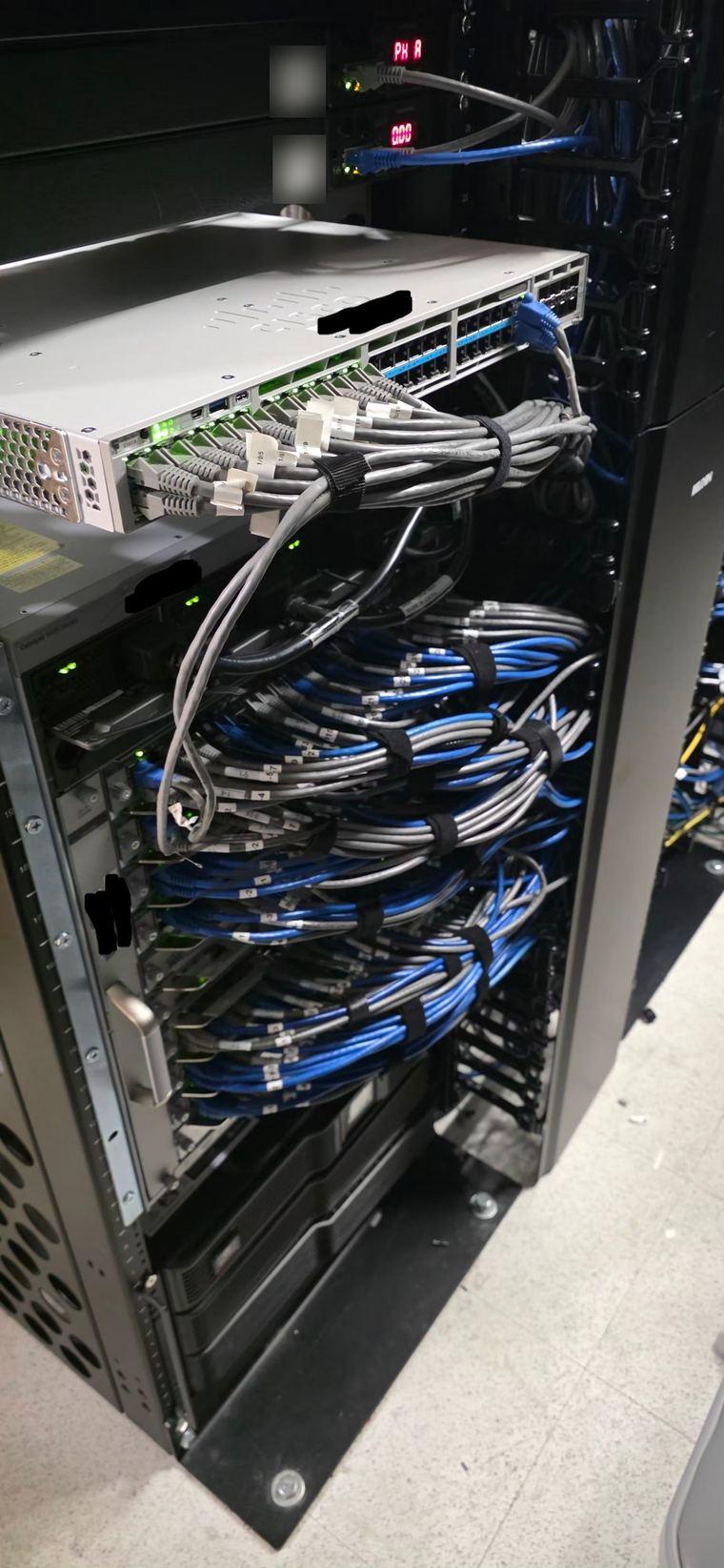
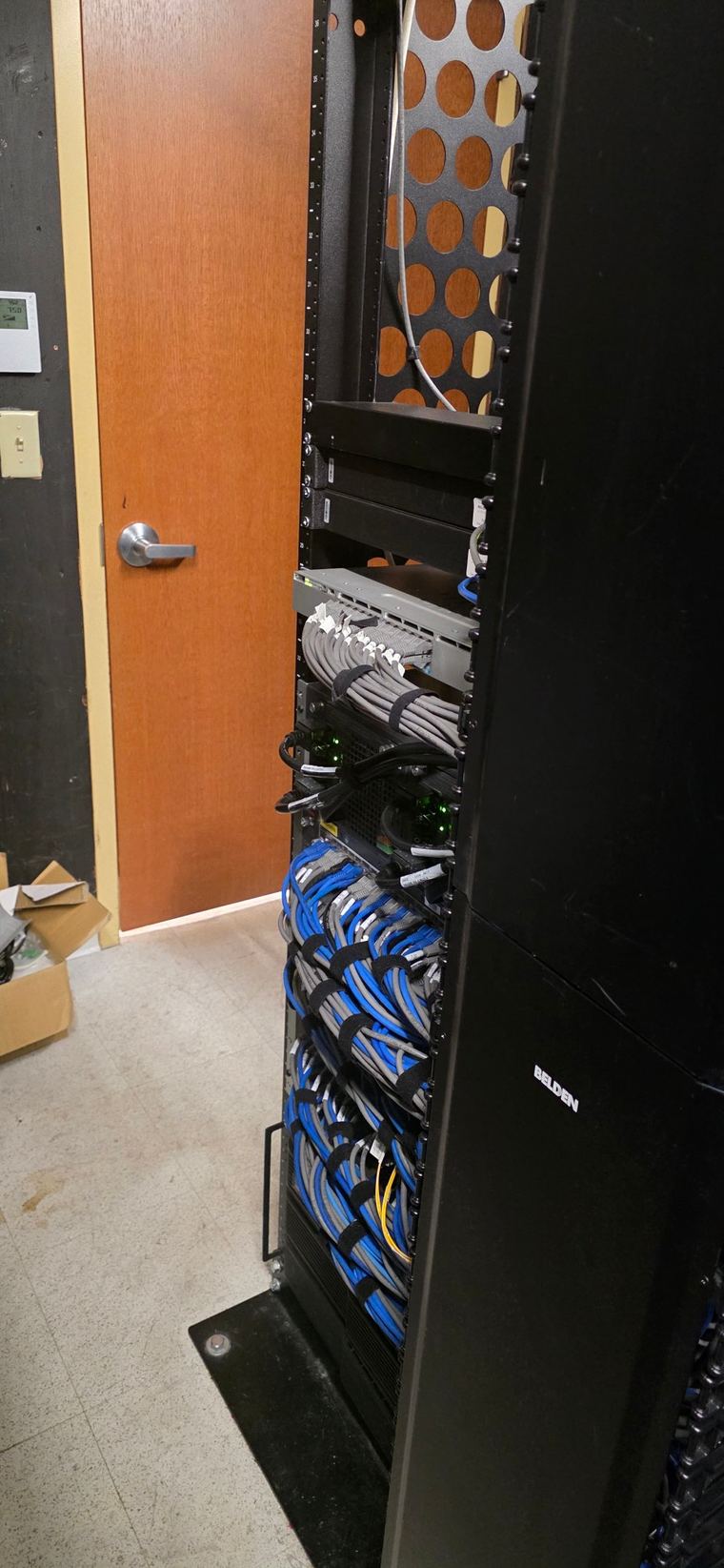
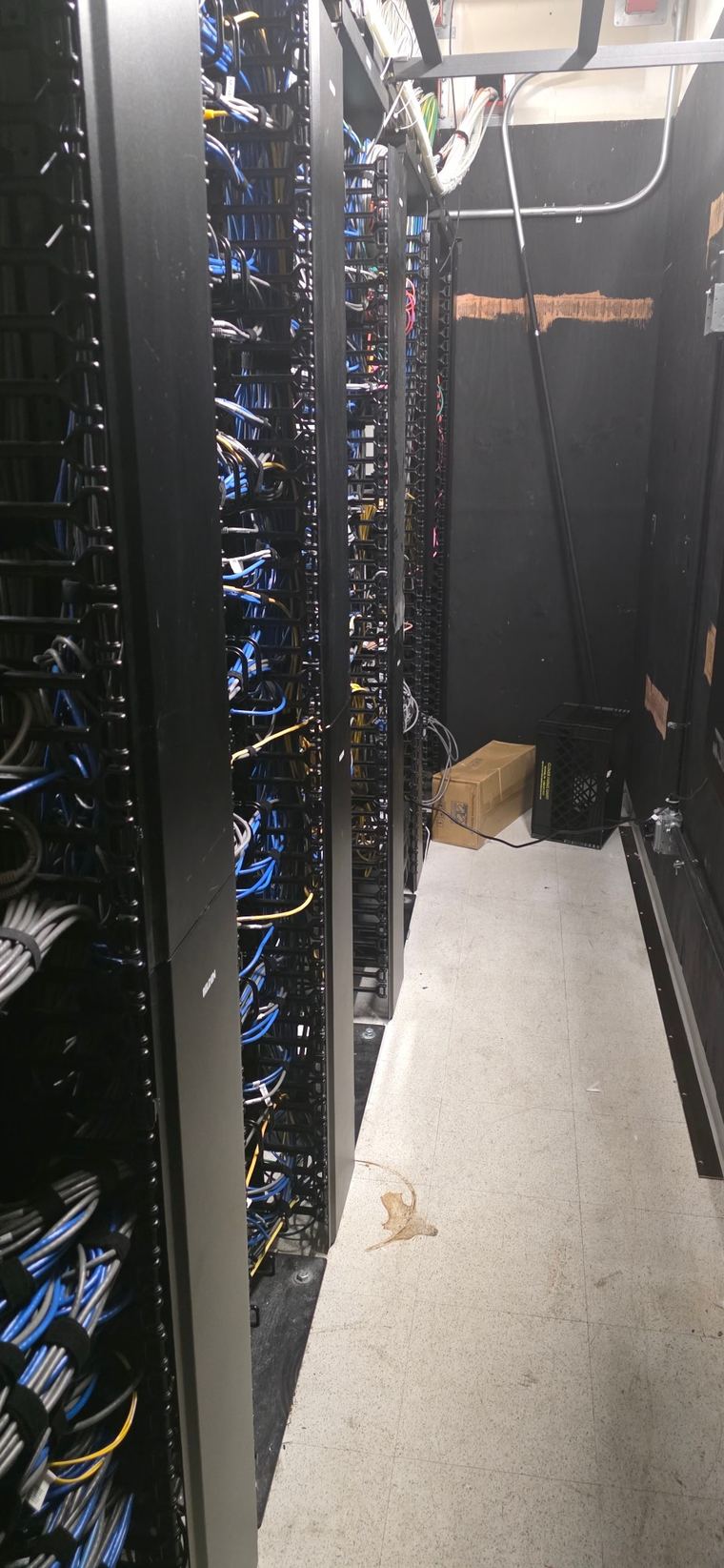
Before and after: from tangled to traceable
These photographs are from real cable cleanup work, with identifying details blurred. Alongside them is a sample port-mapping report showing the kind of documentation that goes with the physical result.
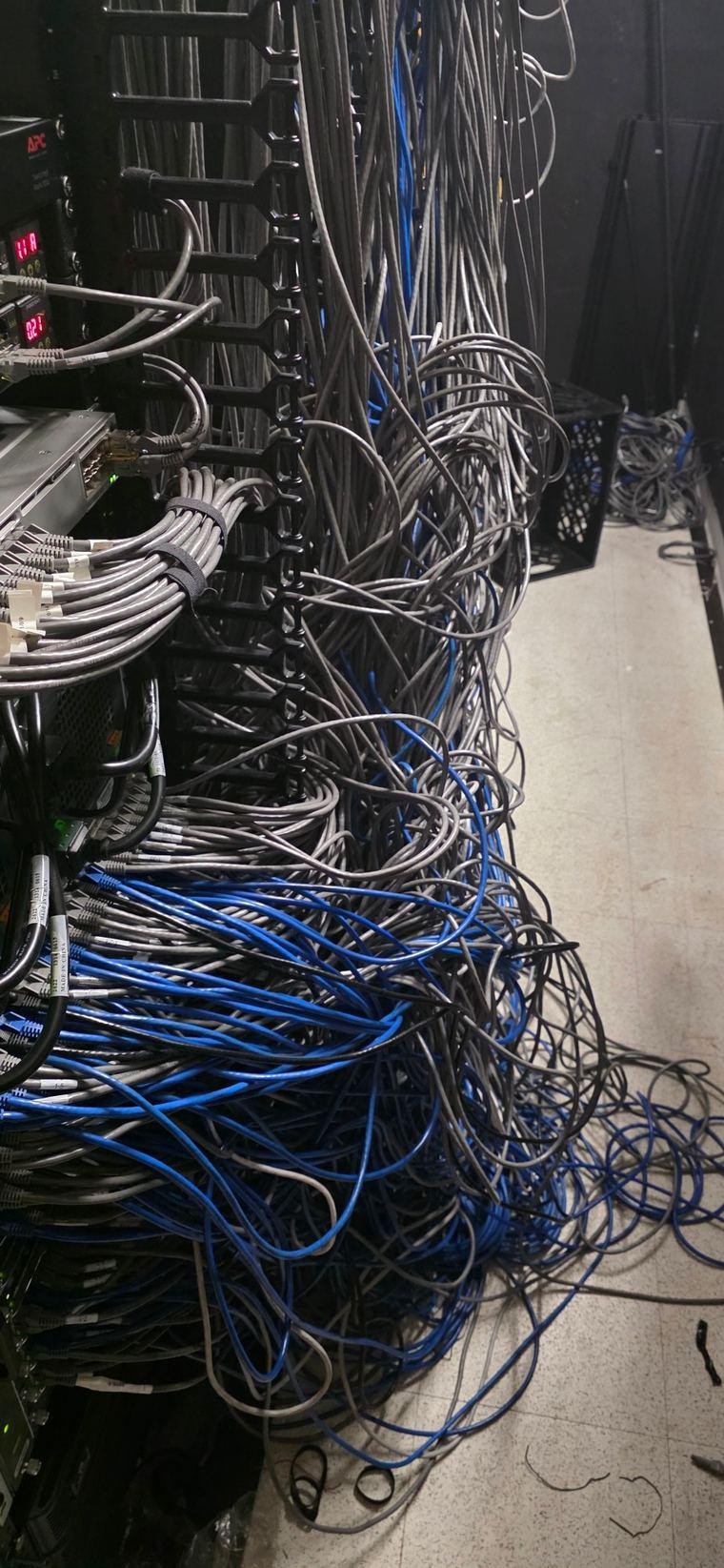
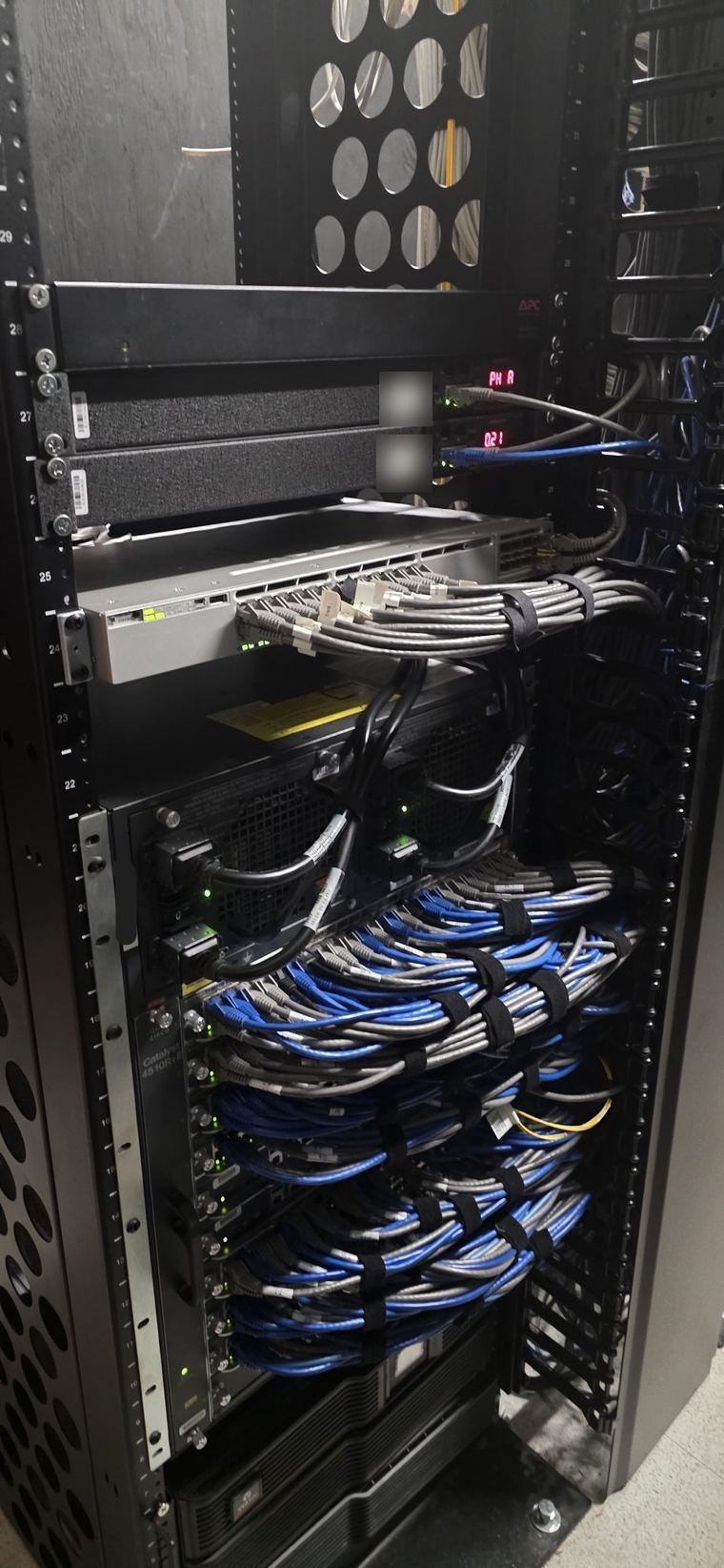
Example from a cable cleanup project. Connections were traced, grouped, secured and labeled so each cable can be followed from port to destination.
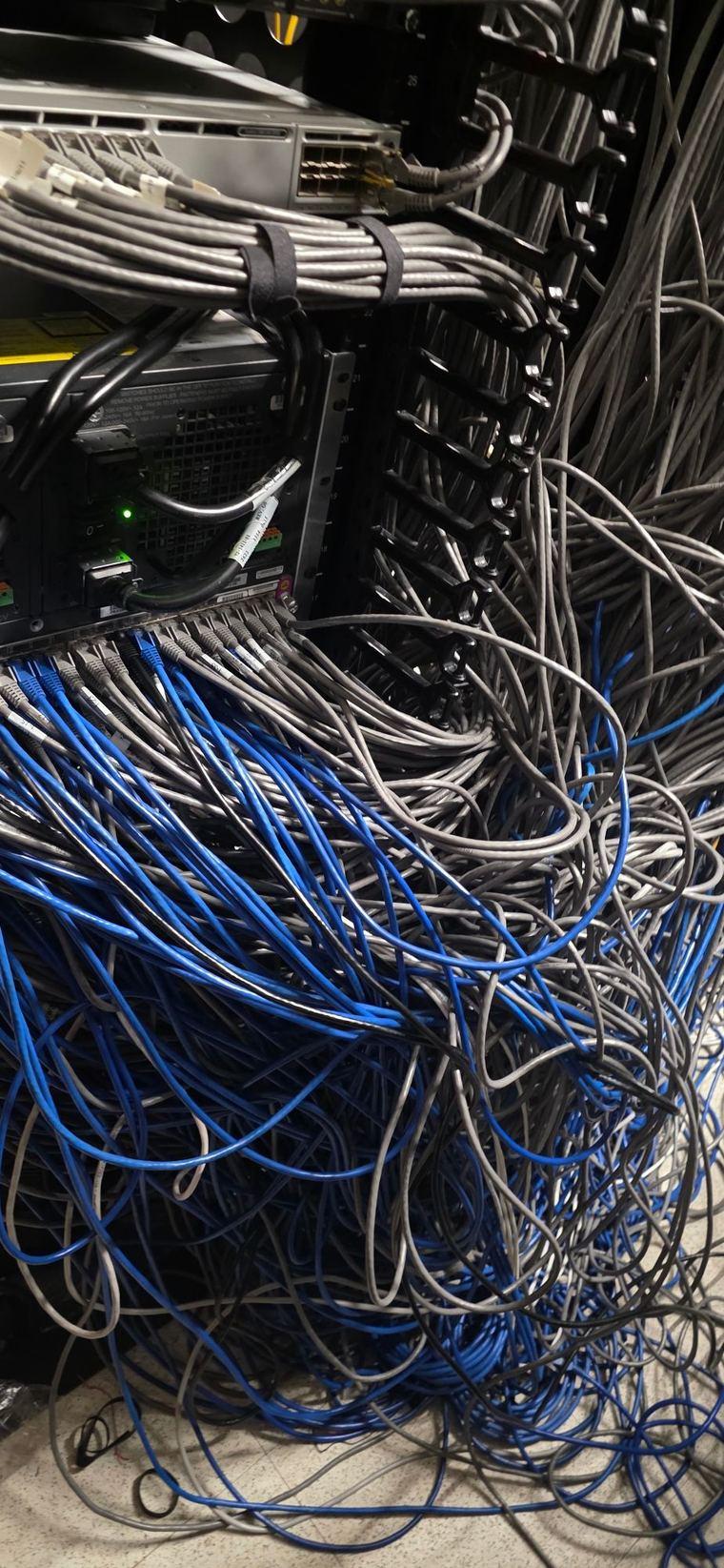
Another before and after. Cables are bundled by port group, secured and labeled at the port so equipment can be serviced without guesswork.
Sample report
Port-mapping report: switch SW-EX-01, closet A
Fictional data for illustration. It is not from a real customer or site.
Scroll the table sideways for more.
| Switch port | Cable ID | Patch panel / port | Connected device | VLAN | Mode | Status |
|---|---|---|---|---|---|---|
| Gi1/0/1 | C-0101 | PP-A / 01 | Workstation, Room 101 | 20 · Data | Access | Active |
| Gi1/0/2 | C-0102 | PP-A / 02 | Workstation, Room 101 | 20 · Data | Access | Active |
| Gi1/0/3 | C-0103 | PP-A / 03 | IP phone, Room 102 | 30 · Voice | Access | Active |
| Gi1/0/4 | C-0104 | PP-A / 04 | Wireless access point AP-EX-07 | 40 · Wi-Fi | Access | Active |
| Gi1/0/5 | C-0105 | PP-A / 05 | Printer, hallway | 20 · Data | Access | Active |
| Gi1/0/6 | None | None | Nothing connected | None | None | Unused: cable removed |
| Gi1/0/7 | C-0107 | PP-B / 03 | Unidentified device | To confirm | To confirm | Needs review |
| Te1/1/1 | F-0001 | FP-1 / 01 | Uplink to SW-EX-CORE | 20, 30, 40 | Trunk | Active |
Cable ID, patch-panel port and device come from physical tracing. VLAN and mode are recorded only where your team authorizes read access to the network. Anything we cannot confirm is listed for review, not guessed.
What to prepare
What should you prepare?
- Areas, racks or closets in scope and any areas that must not be touched
- Labeling convention and any existing port map to reconcile against
- Which links are live, redundant or safe to move, and when
- Whether authorized read access to the network will be available for VLAN mapping
- Replacement patch cords or optics that will be used
- Maintenance windows for any work on live connections
How it works
How does it work?
Step 1: Infrastructure assessment and site survey
We evaluate your racks, switches, patch panels, copper and fiber connections, cable routing and overall physical condition, and identify disorganized cabling, abandoned connections, labeling gaps and obstacles to future upgrades.
Step 2: Cable tracing, port identification and VLAN mapping
We trace connections between switches, patch panels and devices. Where authorized network access is available, we also document switch-port assignments, interface descriptions, configured VLANs and trunk connections, tying the physical cabling to the logical network.
Step 3: Professional cleanup and remediation
We organize, reroute, secure and label cabling using appropriate cable-management practices. Damaged, wrongly routed or unnecessary cables are flagged, and copper and fiber can be replaced or rerun, with active connections protected through approved change procedures.
Step 4: Port-level labeling and network documentation
We apply clear, consistent labels to cables, switch ports and patch-panel connections. Depending on scope, you receive port-mapping documentation, VLAN assignments, cable identification records and before and after photographs.
Step 5: Verification and completion reporting
We verify the affected connections against the agreed scope, review the finished installation, and document completed work and any outstanding issues.
What gets documented
What gets documented and verified?
- Port-mapping documentation
- VLAN assignments, where network access was authorized
- Cable identification records and the labeling convention used
- Before and after photographs
- Completed work and outstanding issues, in a completion report
Where is it available?
Cable cleanup is delivered first in the New York and New Jersey region, with other locations assessed on scope and resource availability.
Industries that use this service
Questions
Network Cable Cleanup & Remediation: frequently asked questions
What is network cable remediation?
Tracing, identifying, labeling and reorganizing existing cabling, replacing damaged or wrongly sized cables and documenting the result, so the physical layer is understood and maintainable.
What does cable tracing and port identification involve?
Following each cable end to end and matching it to a switch port, a patch-panel position and the device at the other end, then labeling it so the connection can be read at a glance.
What is VLAN mapping in a cable cleanup?
Recording which VLANs and trunks are configured on each switch port next to the physical cable that uses it. It links the physical layer to the logical network and makes troubleshooting faster.
Do you need access to our switches to map VLANs?
Only where you authorize it. Without network access we still trace and label the physical connections. With authorized read access we can also document port assignments, interface descriptions, VLANs and trunk connections.
How are network cables labeled?
Labels follow a convention agreed with you, typically identifying source device and port and destination device and port on both ends, and are recorded in the port map.
Can cabling be cleaned up while the network is live?
Often, with care. Changes to live links are planned, approved and performed in controlled steps, and may be scheduled in maintenance windows.
What will the port-mapping report look like?
A table listing each switch port, its cable ID, patch-panel position, connected device and, where authorized, VLAN and mode. The page shows a sample with fictional data.
What if we have no existing documentation?
Tracing and identification produce the baseline. The result is a port and cable map you can maintain from that point on.
The result
The result: more than a cleaner rack
- Faster troubleshooting, through identifiable cables, switch ports and VLAN assignments
- Reduced operational risk during hardware replacements, migrations and maintenance
- Improved infrastructure visibility, with organized physical connections and useful documentation
- Greater readiness for network refreshes and future equipment deployments
- Less guesswork for your IT team when identifying connections or responding to incidents
- A professional, maintainable environment that reflects the standards your infrastructure deserves
Featured project
Enterprise Healthcare Network Modernization Across 60+ IDF Closets
Major New Jersey hospital. Ongoing.
Stop guessing what’s connected. Start knowing.
Your network may be functioning today, but that doesn’t mean the infrastructure behind it is prepared for tomorrow’s outage, expansion or equipment refresh.
Data Convergence turns cable confusion into infrastructure clarity. Work completed. Work verified.
Related services
Data Center Infrastructure Services
Physical infrastructure execution: deploying, refreshing, relocating, troubleshooting, verifying and documenting equipment in critical environments.
Learn moreData Center Migration Support
Physical migration support: pre-move documentation, rack mapping, controlled disconnect and reconnect, equipment handling and post-move verification.
Learn moreRemote Hands and Smart Hands
On-site presence and hands-and-eyes support for remote IT and engineering teams, from inspection and cable tracing to hardware installation and replacement.
Learn moreInfrastructure Deployment Readiness
Site, rack, equipment and documentation checks completed before an implementation team arrives, so surprises surface early.
Learn moreTechnical resources
Cable management and remediation
Cable management and remediation: how to approach a messy rack
Untangling cabling on a live network needs a method. Baseline first, change in controlled steps, document at the end.
· 5 min read
Read the guideRack and stack preparation
Rack and stack preparation: what to have ready before the install
Most rack and stack delays come from missing rails, power mismatches or unclear port maps. A short preparation list prevents them.
· 5 min read
Read the guide
Get started
Ready to talk about network cable cleanup & remediation?
Different needs need different starting points. Pick the one closest to yours and we will take it from there.
Request service or a quote
A service requirement or planned project that needs scope and a statement of work.
StartUrgent support
A site needs physical attention soon. Share what is known and what needs doing.
StartTalk to an expert
Discuss an approach, feasibility or options before you commit to scope.
StartBook an assessment
Review readiness, documentation and risk ahead of a deployment or migration.
StartPartner inquiry
MSPs, VARs, integrators and technology providers exploring white-label delivery.
Start
Not sure where to start? Learn about Data Convergence or contact the team.